
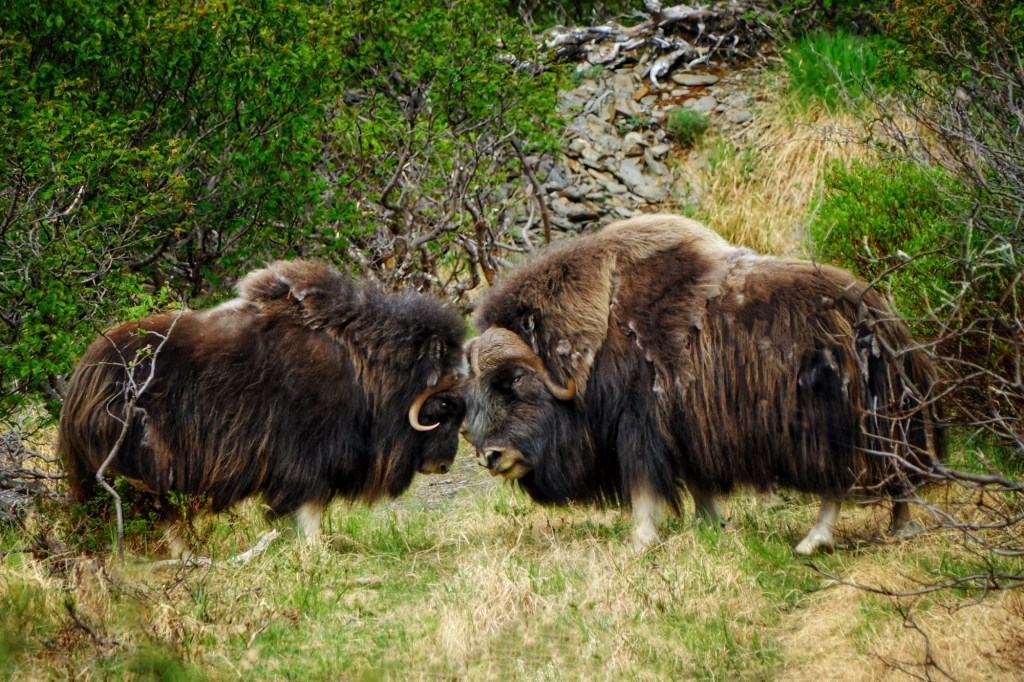
I can best describe a muskox as, well, let’s see, first take a miniature version of an American Bison, add an external coat that looks like it belongs to a wooly mammoth, and then top everything off with an elongated pair of big horn sheep horns. We had two opportunities to see these magnificent creatures while roaming the roads from Nome.
Muskoxen and wooly mammoths were buds during the Ice Age. They crossed over from Siberia 200,000 years ago. The muskoxen made this arduous journey only to face extinction from over hunting by the mid 1800’s. They were entirely wiped out in Alaska, and it took shipping 34 muskoxen from Greenland to repopulate the species. Alaska is now home to 5,300 muskoxen, with 60% living on the Seward Peninsula where Nome is located.
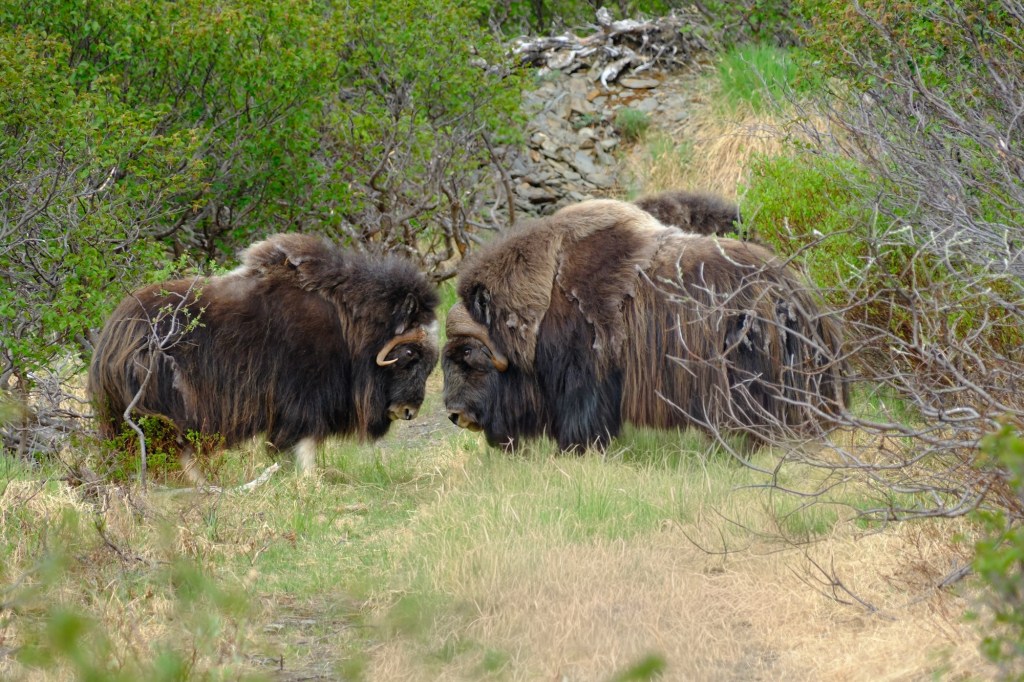
Mark and Cat spotted a few on the road ahead of us, and Cat being an experienced wildlife spotter slowly crept the car up the road as they crossed. As they meandered up the trail, I watched their ancient looking tushies fading away, and wondered if I had just transported myself through a Star Trek like wormhole into another time.
Cat broke my ridiculous reverie by declaring she wanted to get out of the car and look for muskox “fur” (Note, Cat wouldn’t use the term fur she would use the technically correct term…. qiviut, but I have a hard time remembering it, spelling it, and saying it, so I opt for the inaccurate three letter version). Apparently, spring is when they shed their undercoats which helps them to survive temperatures as low as -70 degrees Fahrenheit. It is considered 8 times warmer than wool, doesn’t shrink, is incredibly soft and used for luxury items. As I write this, I am now wishing I did not poo poo Cat’s suggestion that we hunt for qiviut in the scrubby brush.
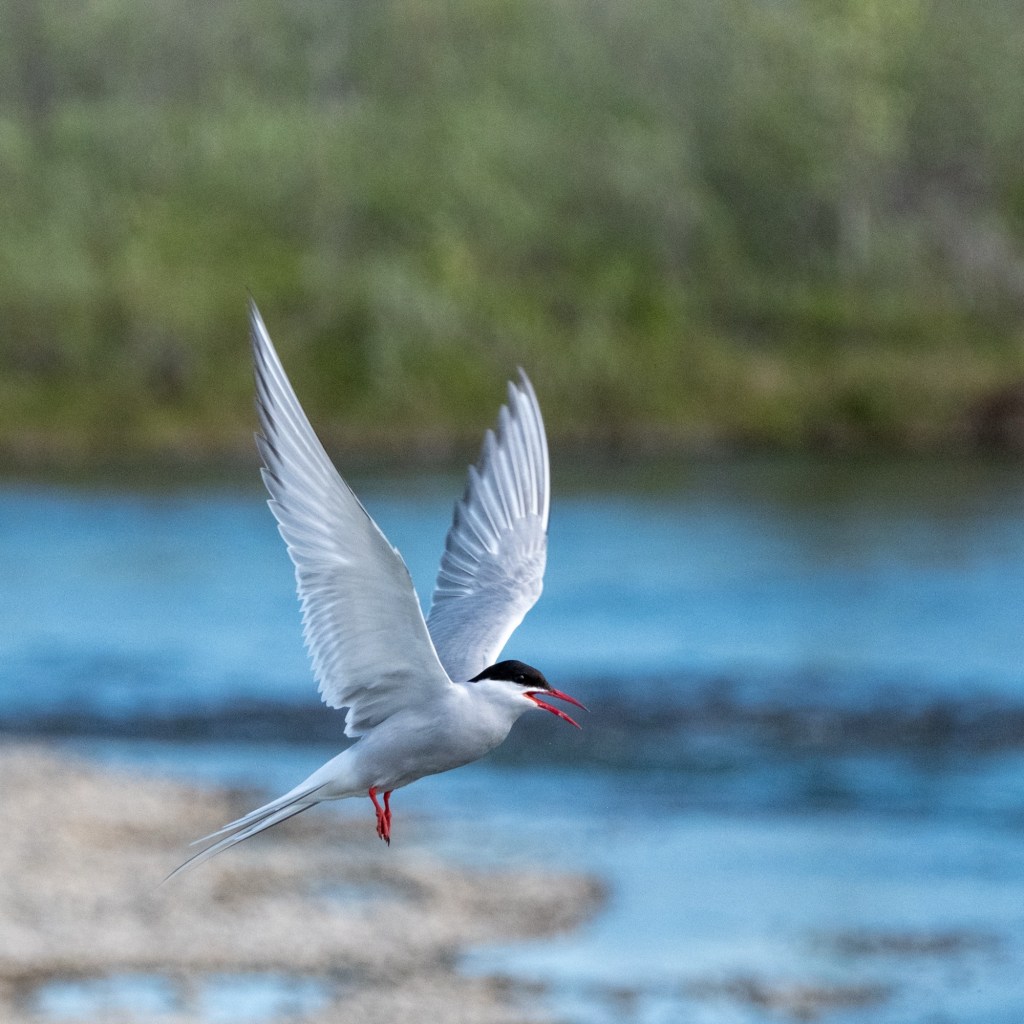
Oh…and Peter was harassed by an Arctic Tern today. It was straight out of an Alfred Hitchcock movie and downright terrifying.



Leave a comment