


Well, technically it was more of a mid-morning snack. After years of pleading, fake crying, real hysterics, and just plain pouting, Peter finally caved and took me to The Creamiest Place on Earth (at least that’s what the Tillamook people call it). Yes, we went to the Tillamook Cheese Factory in Tillamook, where even lactose intolerant people will choose to suffer in the name for high quality dairy products.
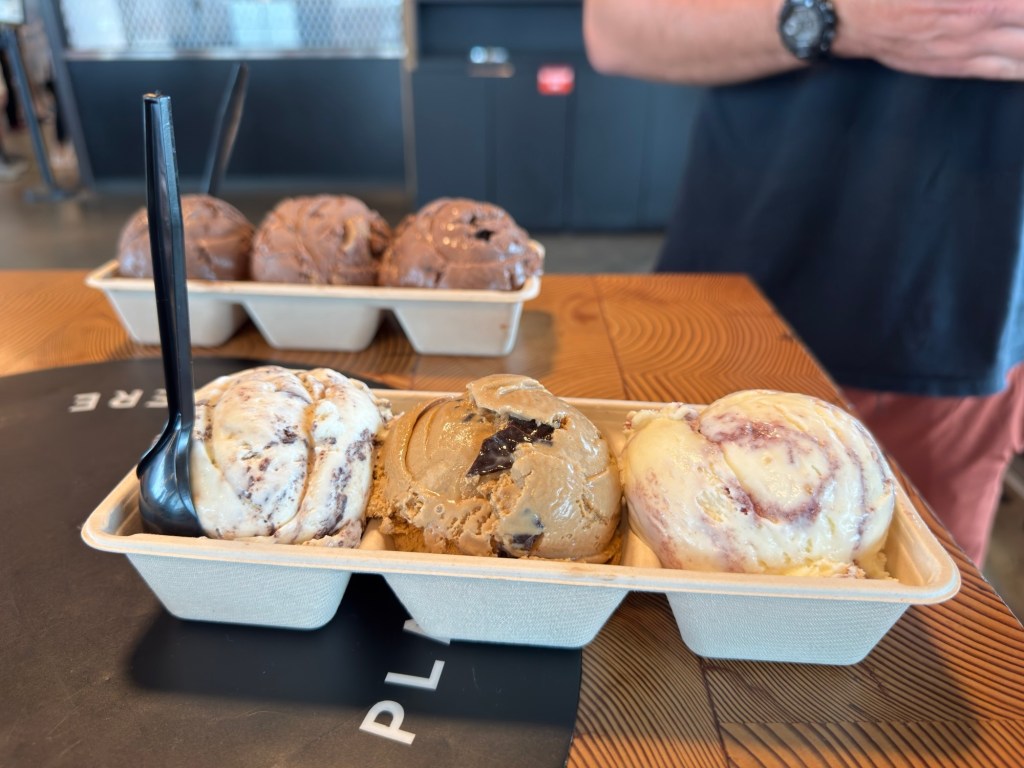
For a mere $15 you can get a guided tour of the cheese making process, and a cheese tasting afterwards. But if you want to partake in the ice cream flight (a literal sugar liftoff) – you will have to fork out another $12.

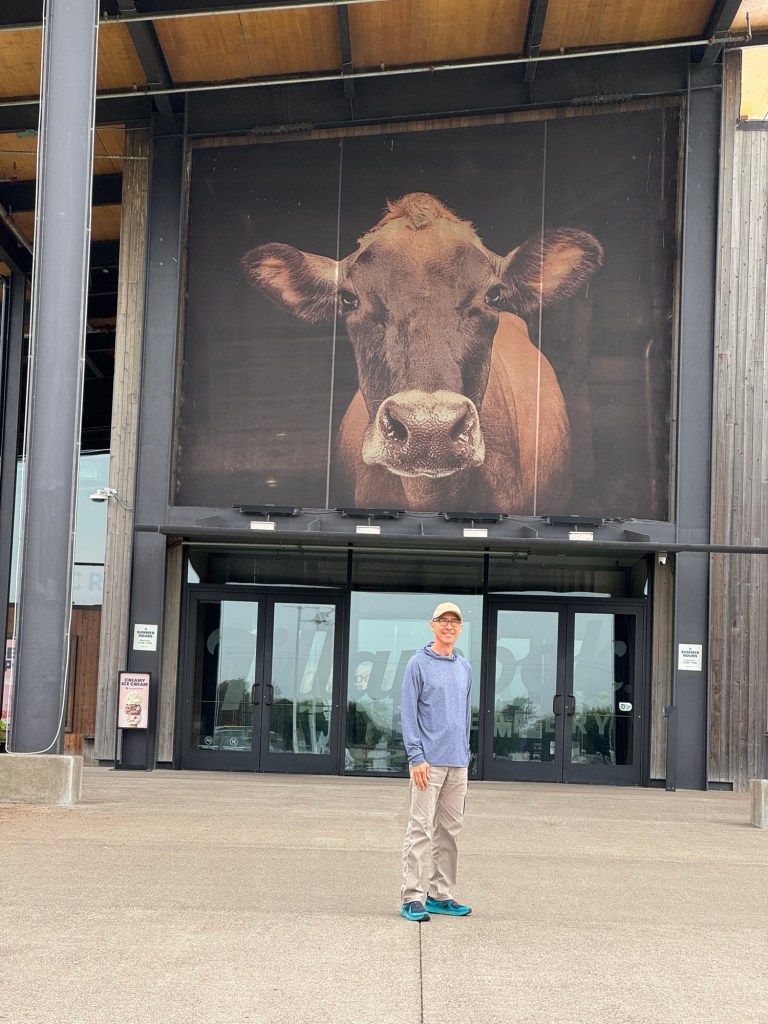
So how is cheese made on a semi- commercial scale? I knew you were asking yourself that question right about now. Well it all starts with a cooperative of 60 farms that care for 30,000 cows, hence the funky smell as you drive through town. It is the first place I’ve been where cows outnumber people (30K vs. 29K). These are hardworking cows, they work 40% of the day, and then spend their remaining time resting and re-fueling for the next grueling day.
Ok – on to the actual cheese making. At Tillamook, all the cheese has only 3 ingredients, but some of the cheese has an extra one. Can you guess? If you guessed “natural food coloring” then you are right. All cheese is white (I mean have you ever seen bright orange/yellow milk? That would be kind of gross. I don’t think even chocolate powder could mask that color). It’s the yellow cheddar that starts white, gets color added and turns yellow/orange. I spent some time in the middle of the night wondering how all this yellow cheese business started. I’m guessing with the whole Kraft Blue Box Mac’n Cheese but that’s just a guess. More rabbit hole research is needed. What you need to take away from this whole tangent is: white cheese is the fancy kind. And aged cheddar really does taste that much better.
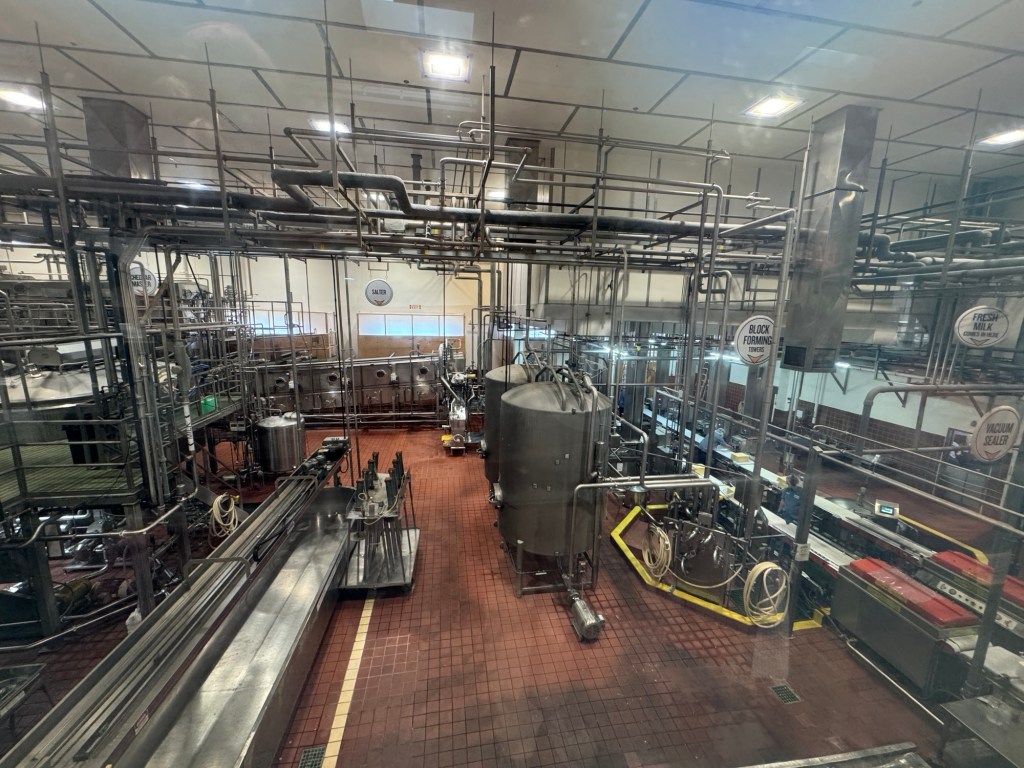
Alright, I’m finally getting to cheese making. By the way, on this tour you get to see where the magic happens from one floor above and everything is very well signed. The milk comes in, they add stuff, including hot salt, they stir it around…. A lot….they separate out the “waste” product in the form of whey (yes, that’s what’s in your protein powder). The whey is 90% of the product, so it’s nice it isn’t wasted.
It then gets formed into 43 pound loafs called Mother Loafs (no idea why 43 pounds and not, let’s say, a nice even number like 40 or 45, and I feel like there is an inside joke about the name, but I will spare you my ruminations). The loafs are vacuum packed and stashed in a cold warehouse that is 90 feet tall and the size of a football field….along with 35 million other pounds of cheese. Peter pointed out that the warehouse holds about $25 million dollars worth of cheese. Not sure if he’s planning a heist. I love cheese, but not that much.
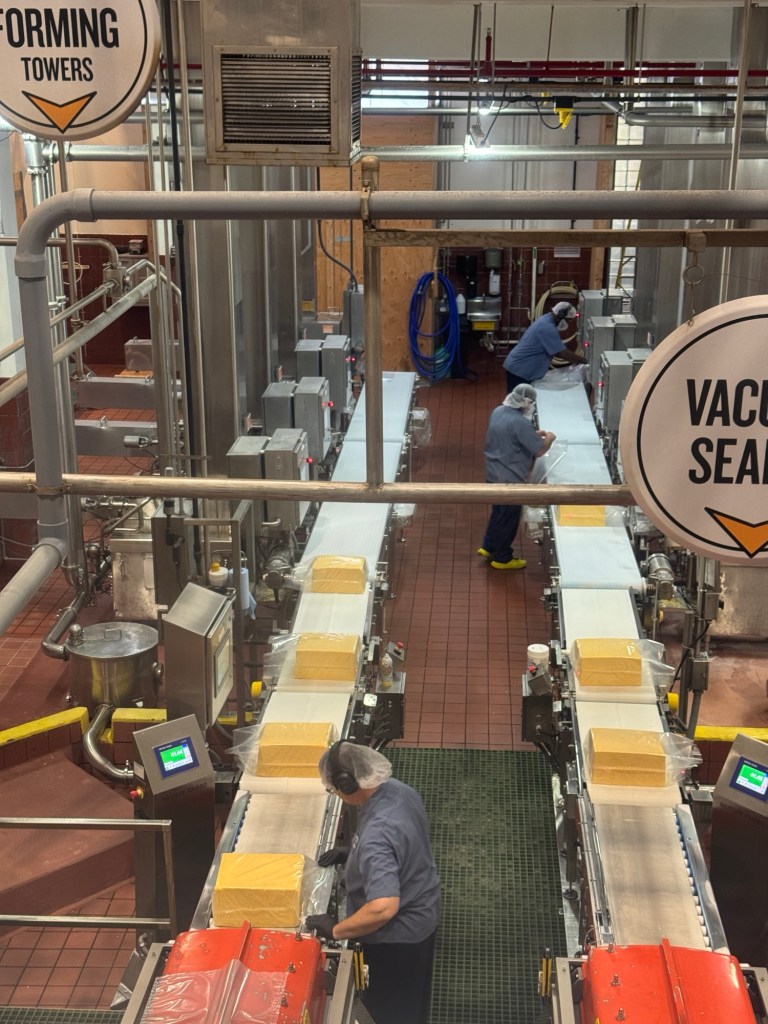
All this cheese chills out for at least 4 months and then it’s unpacked, cut, weighed, re-weighed, repackaged, visually checked, and finally gets introduced to the world. It was this part of the tour where 20+ people had their faces plastered against the glass in awe. Up until then it was a little like Charlie Brown’s teacher talking. The flakes and the scraps from this process are turned into shredded cheese. That’s something to consider when purchasing for taco night.
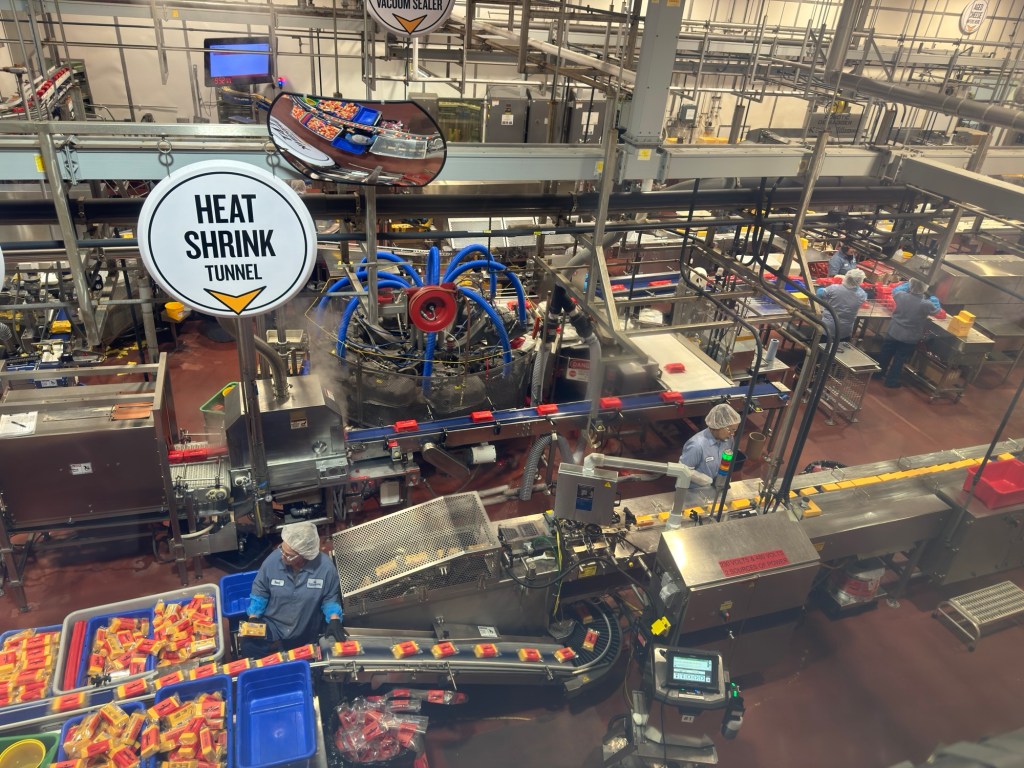
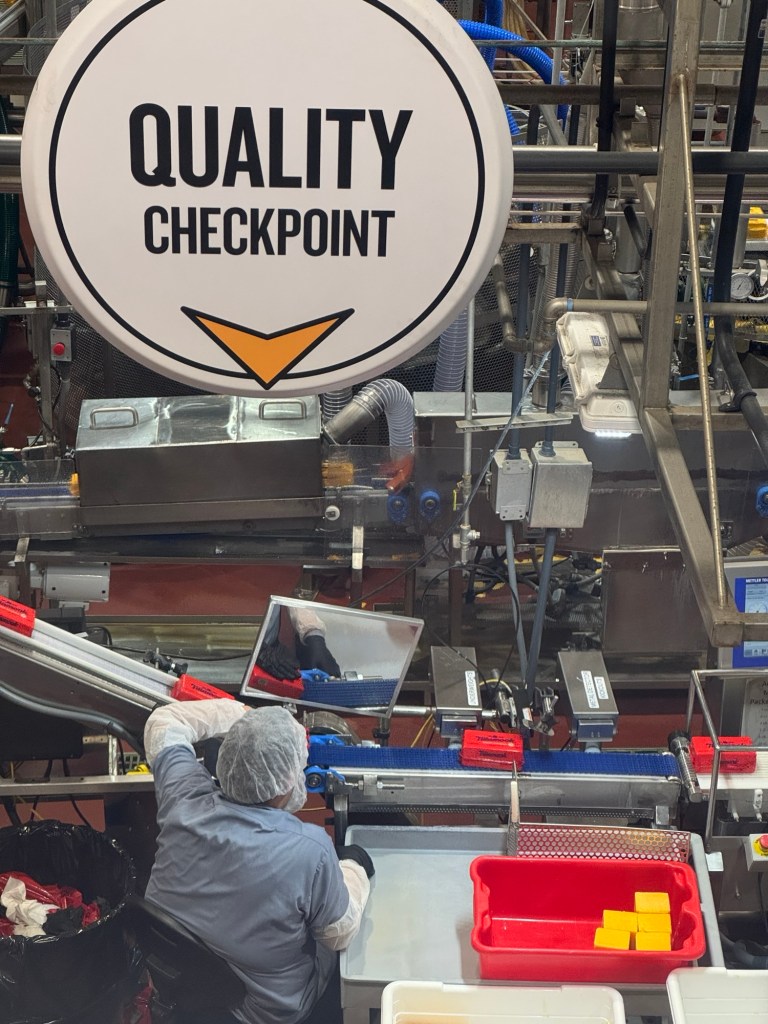
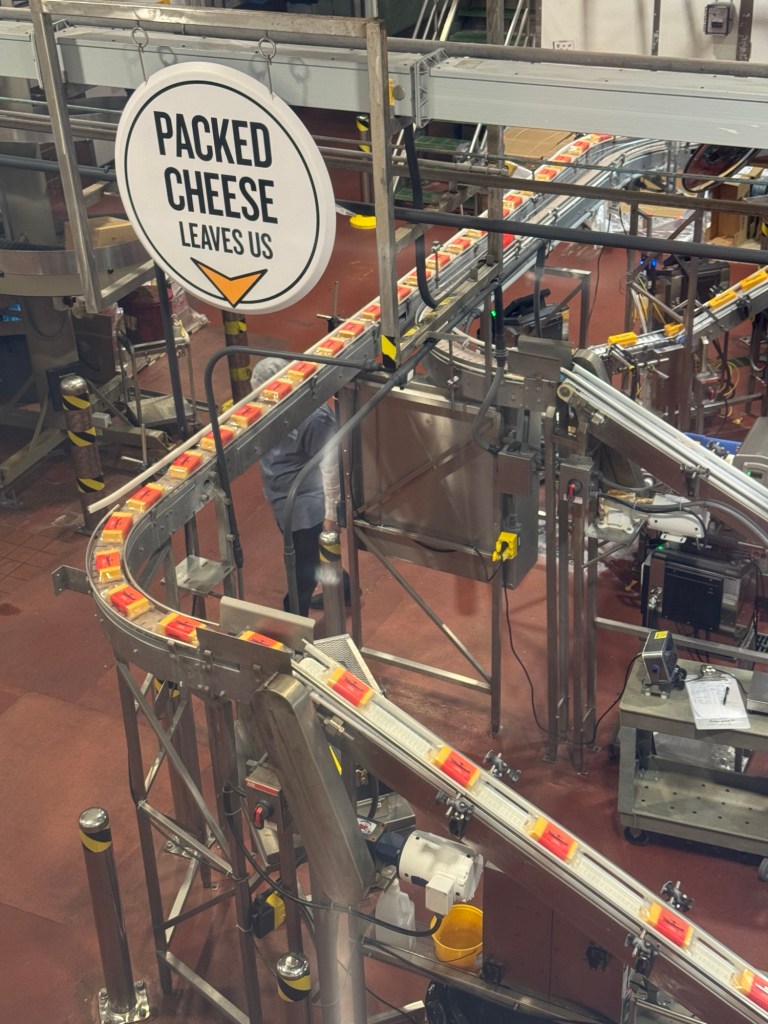
This is what happens for 170,000 pounds of cheese…every….single…day. Yes, people we eat a lot of cheese. And this is just one company. So next time you are in the grocery store, looking at all that cheese….well….just buy the white Tillamook cheddar. The cows will thank you.




Leave a comment