
I hope you enjoyed your brief respite from bird antics, because today was all about birds and we witnessed a whole bunch of frisky business.
We sailed all night to arrive at Genovesa by 6:00 AM so we could be the second group up on the cliff to photograph the birds. This island doesn’t get its nickname, Bird Island, because there are only 100 birds hanging out. It is aptly named because there are thousands and thousands of birds flying around and strutting on the ground, all making their unique calls which sounds similar to an elementary school symphony that is warming up for practice.
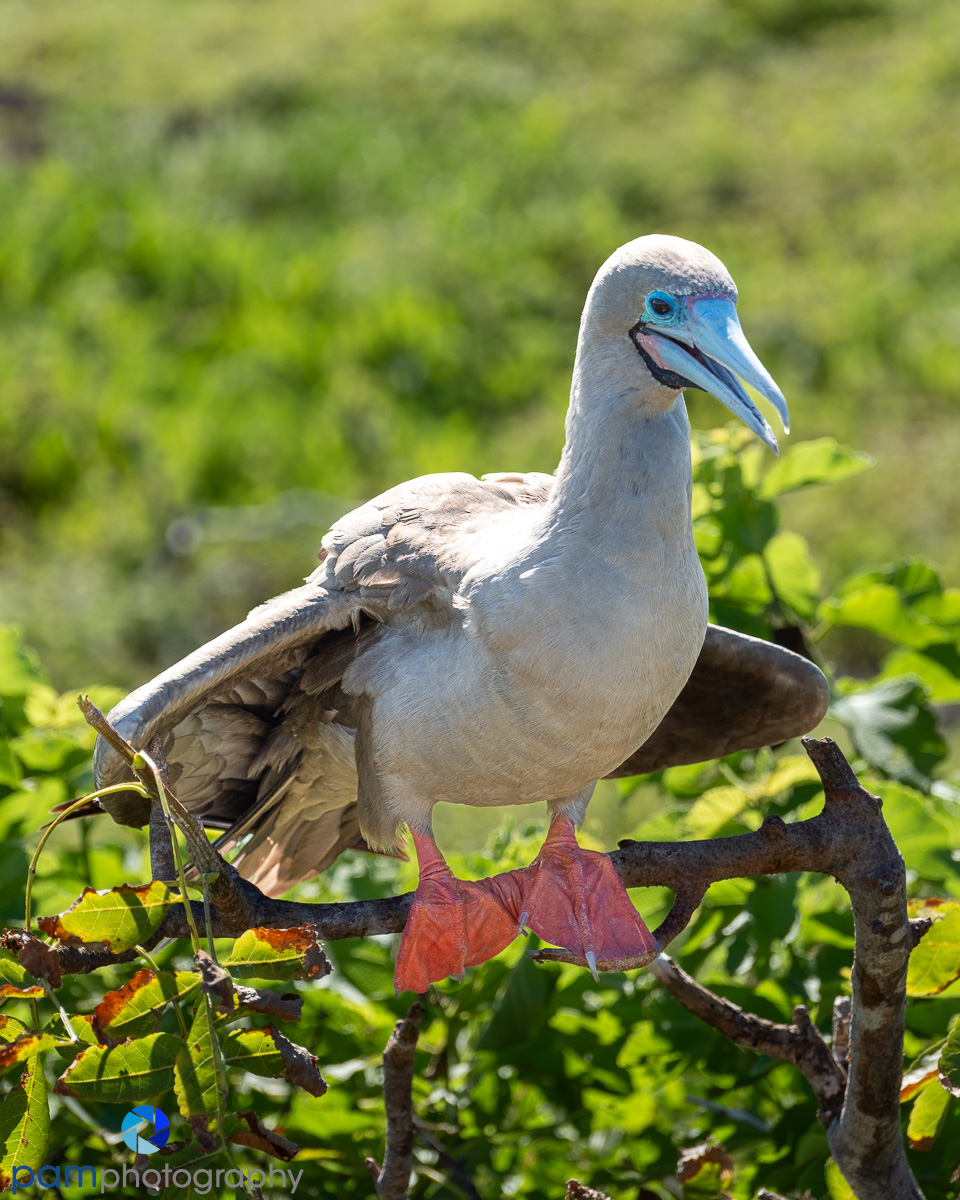
There are 5 different species of birds that make this cliff their home. We focused on photographing two species today, the Pirate Birds of the Sea, also known as Frigate Birds, and the Booby, which has quickly ascended my bird favs hierarchy and may be coming close to being declared to be my favorite. And Bird Island didn’t have only 1 kind of Booby… there were two kinds! And one subspecies even had beautiful red feet with electric blue bills. So, a quick recap regarding Boobies. There are three kinds: ones with blue feet, ones with red feet, and ones with plain feet BUT the plain feet kind make up for their blah footwear with beautiful black and white bodies.
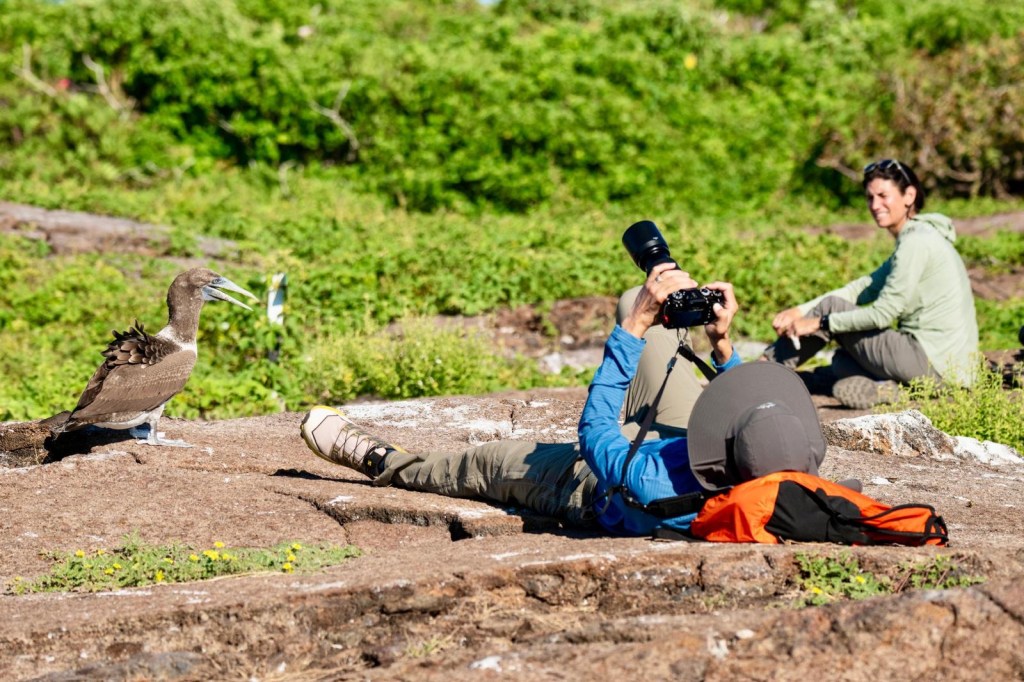
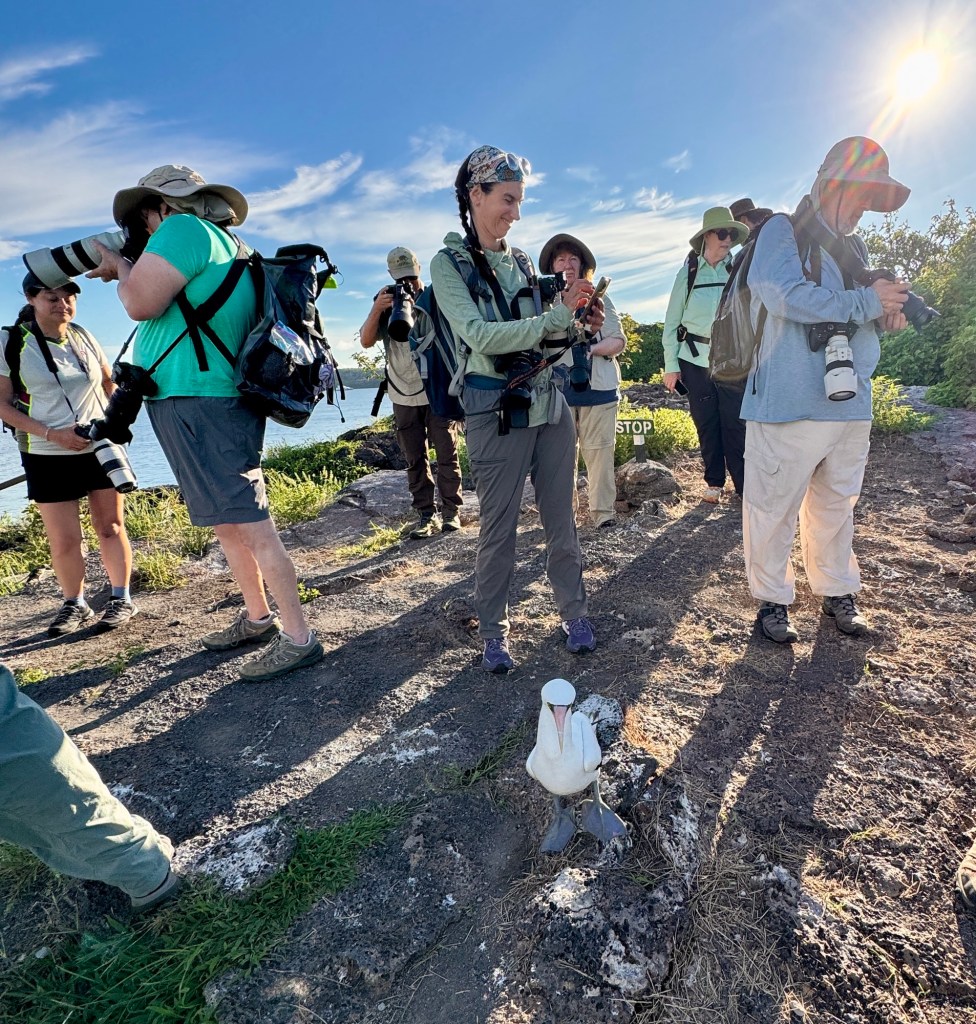
No words can really describe what it was like to walk along this cliff with Booby birds all along your feet on the path. They have no fear of humans, just the opposite, they are really quite curious about us, and they like to peck anything red that gets their attention. I was wearing red/pink shoes, but I guess it wasn’t the “right red” because my hip feet got zero attention. They are such fashion divas.
So let’s talk about those spectacular red feet which glow when illuminated from behind by the sun. Only adults have the red feet. The younger birds that have not left the cliff to feed in the ocean have cement gray feet. The feet turn red because they eat squid. Amazing. More evidence that what you eat not only affects your insides, but also your outsides. It makes you wonder what fried calamari does to your colon.
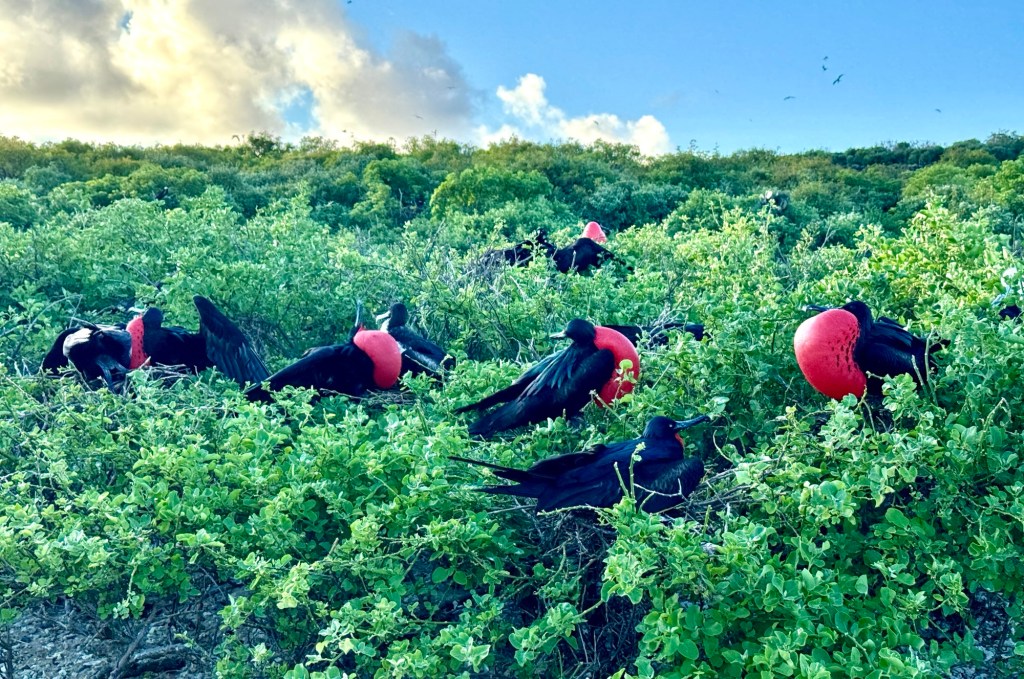
Now onto Frigate Birds. They are confounding. Please make sure you are not eating a meal while you are reading this part. Frigate Birds can’t land in the ocean to feed, so they chase other birds around in the sky and and aggravate them so much it causes them to throw up their semi-digested food, which the Frigate Bird swoops in and eats mid-air. Yes, the Frigate Bird diet consists of eating another bird’s partially digested vomit. It makes the Galapagos Tortoise guava consumption look like luxury dining.
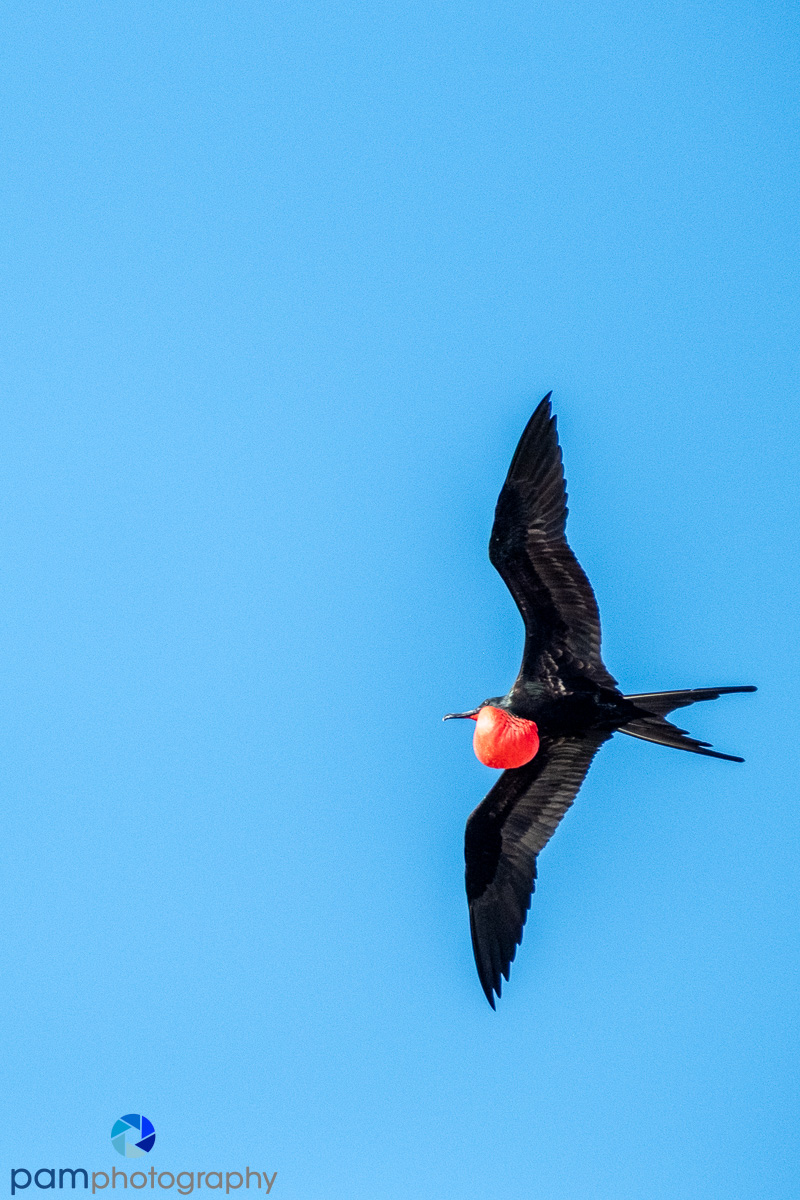
As if that can’t get any weirder, the male Frigate Bird has a big red semi-transparent balloon-like pouch for a neck. When it’s not inflated, it looks similar to a rooster waddle. The male blows this glowing red balloon up to attract a mate and will even thump on it like a drummer in a marching band. Then he really gets into the grove and furiously shakes his head side-to-side. When he is finally chosen by a female, the lucky gal sidles up next to him, they cuddle and he spreads his really long wings behind her. This is not a protective gesture, for her. It’s a protective gesture for him. It keeps her eyes from wondering to another male who might have a better red throat ballon. Peter felt it necessary to share a derogatory term for this, which I will opt to take the classier high road and not share it here.
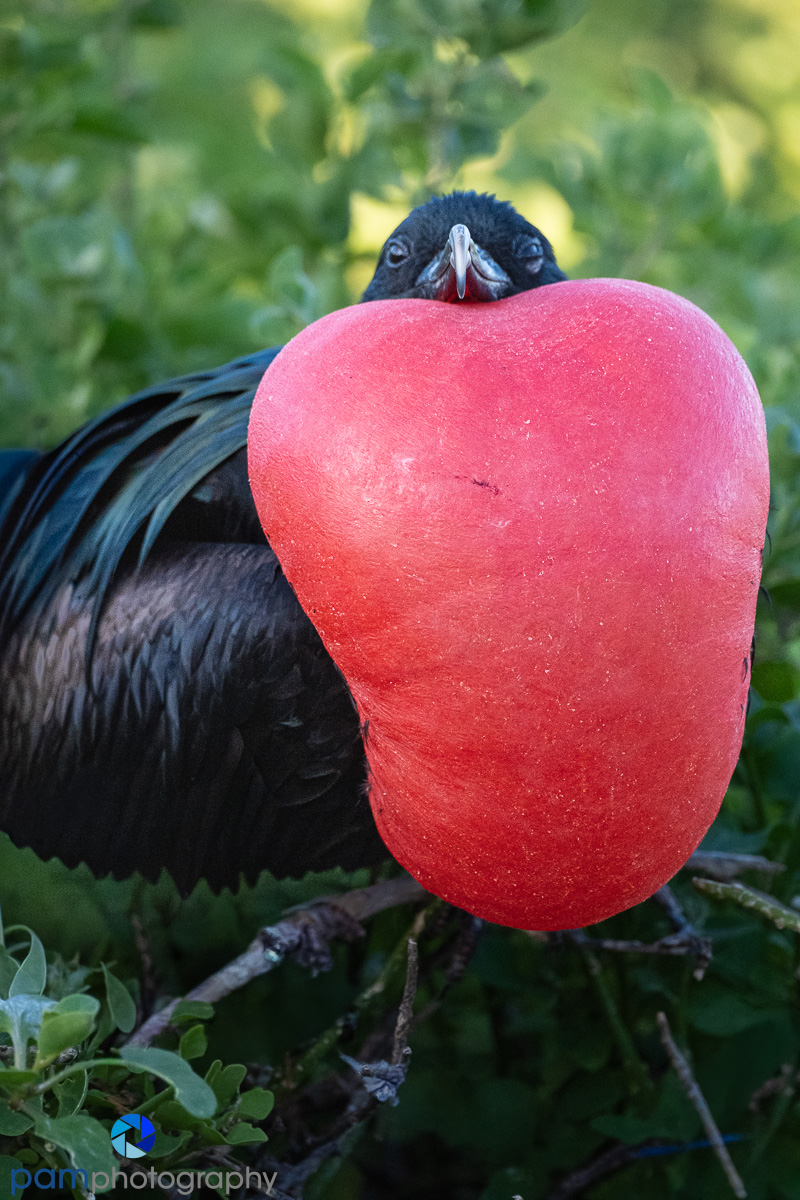
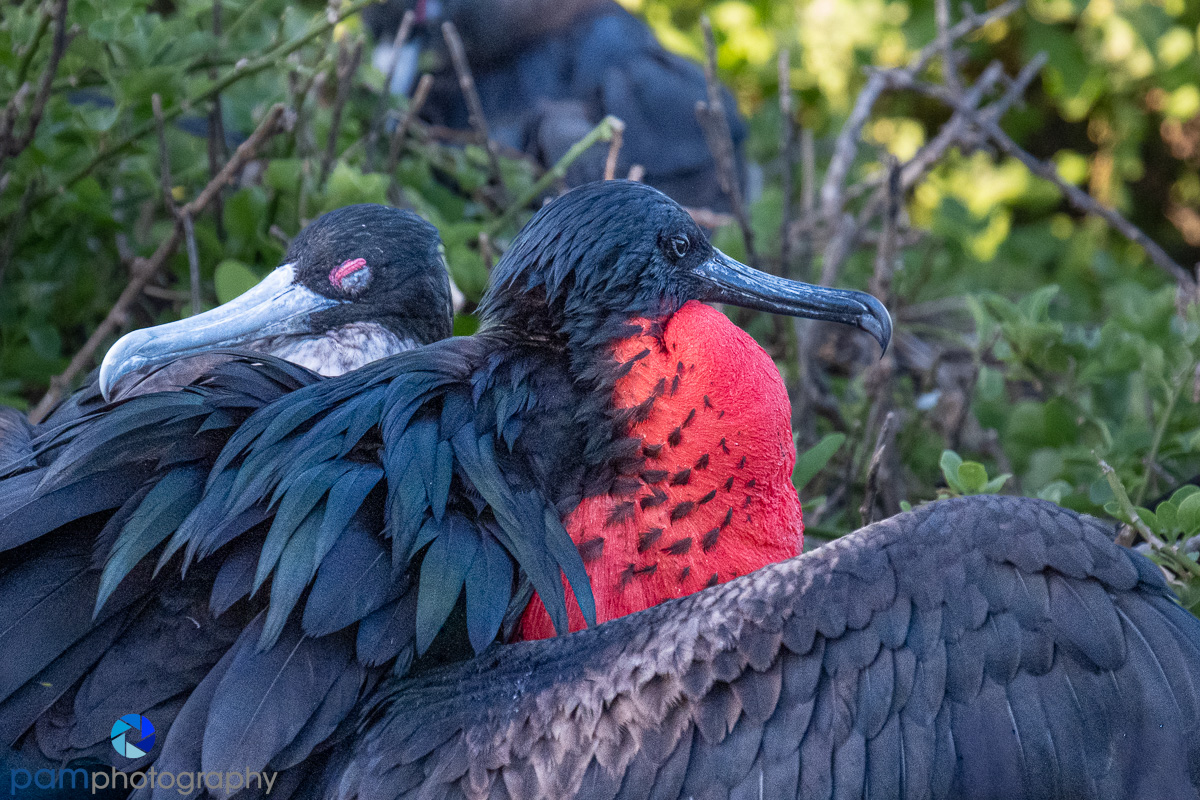
Love must have been in the air. During our afternoon outing we encountered a large patch of Frigate birds that were two arms length away. Most were males and had their vibrant red balloons inflated. A couple of them were successful in attracting members of the opposite sex. It was like watching “The Bachelor” Galapagos Pirate Edition.
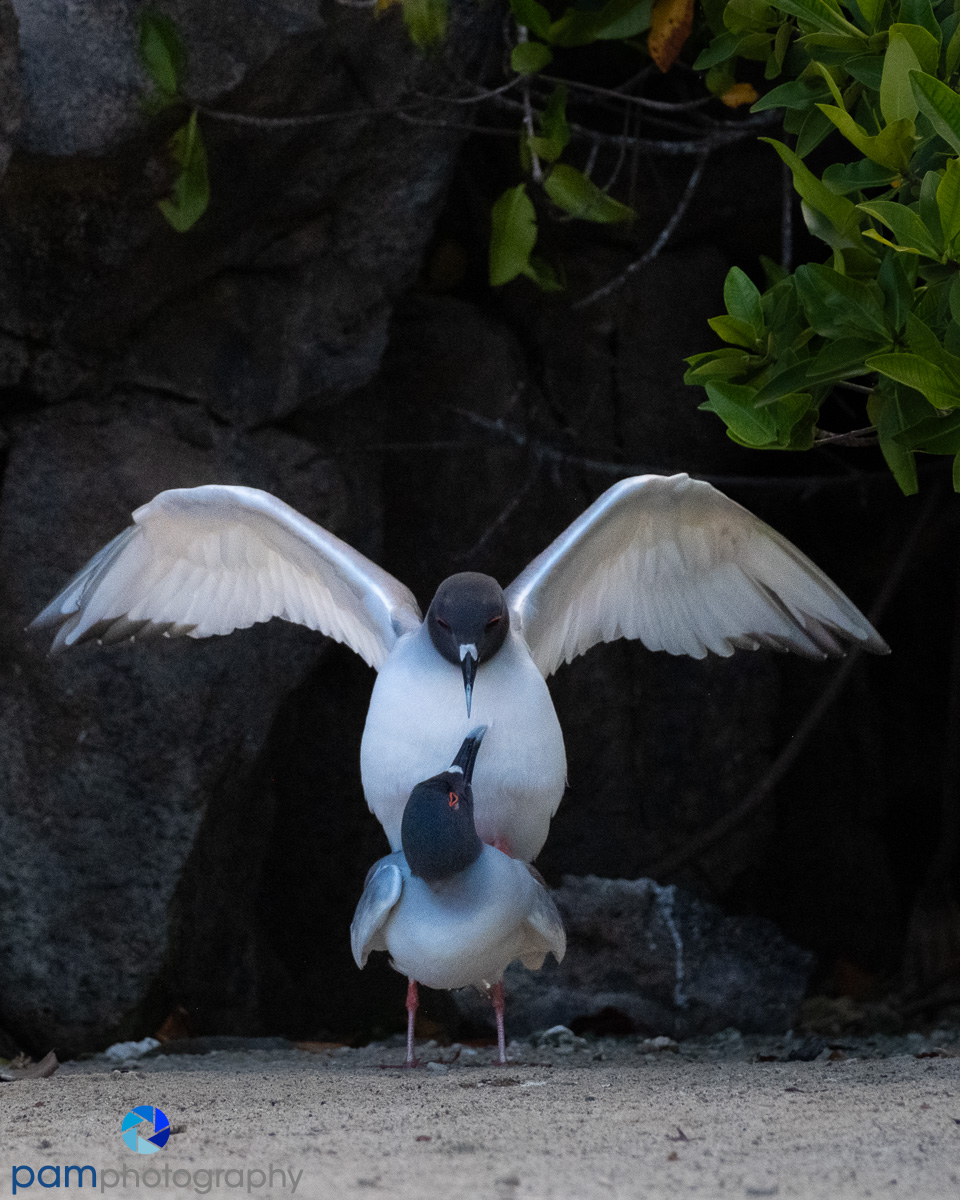
But our foray into bird porn was not over with the Frigate birds. A member of our group who was leading the way, rounded a corner, doubled back, and asked with curiosity “why is one bird on top of another bird’s back?” The naturalist hustled over, followed by a pack of photographers and confirmed what we all thought was happening. Then we had to figure out a way to explain what was happening without those oh so helpful diagrams they showed us in school. And to think I thought they were kind of dumb. Most of us in the group have probably explained things like this to our children. But with nothing more than a simple gesture of eyes-to-ground, we unanimously abdicated to the 26-year old naturalist to describe “how it works” for Galapagos Gulls. She summarized her field biology lesson as “oh, one was giving the other a back massage”. There are so many great euphemisms for such a universal act.
I have learned so much in my 5 short days. You could spend a lifetime just trying to understand the birds, their behavior, how they have evolved, etc. And that’s just the birds….


Leave a comment