
In today’s episode of Frisky Business, we feature the Giant Tortoise. Not to squash the excitement for what you are about to read, but we did not actually witness any “business”. We heard an awful lot about it though, which I will share with you in excruciating detail. But first….
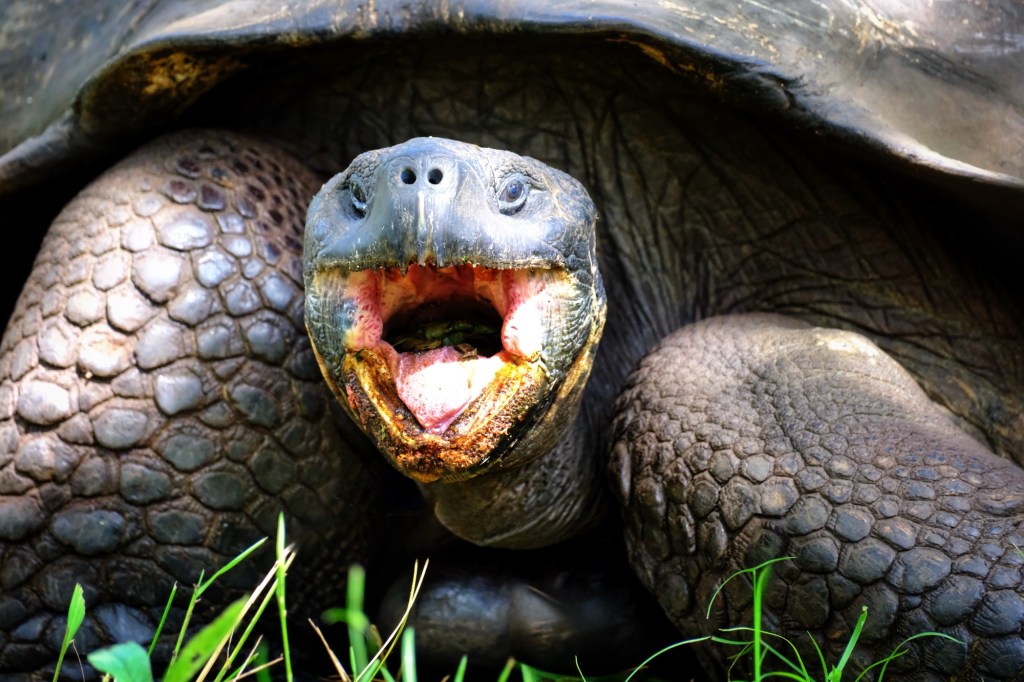
Ibrehi received special permission for us to visit the El Chato Tortoise Reserve on Santa Cruz Island. Santa Cruz is the most populated island in the archapeligo with 22,000 people (compare this to Floreana’s 100 people, two dogs, and a cat. And no, I’m not missing a zero here.). This is because Santa Cruz is the only island in the Galapagos with a fresh water source.
If we have learned only 2 things during our first four days on this trip is that we don’t say “seal” – they are all sea lions, and we don’t say “turtle”- there are turtles and there are tortoises. Turtles have flippers and can swim, tortoises can only float…if they ever make it to water. My new Aussie friends educated me on this one so I wouldn’t embarrass myself in front of Ibrehi.
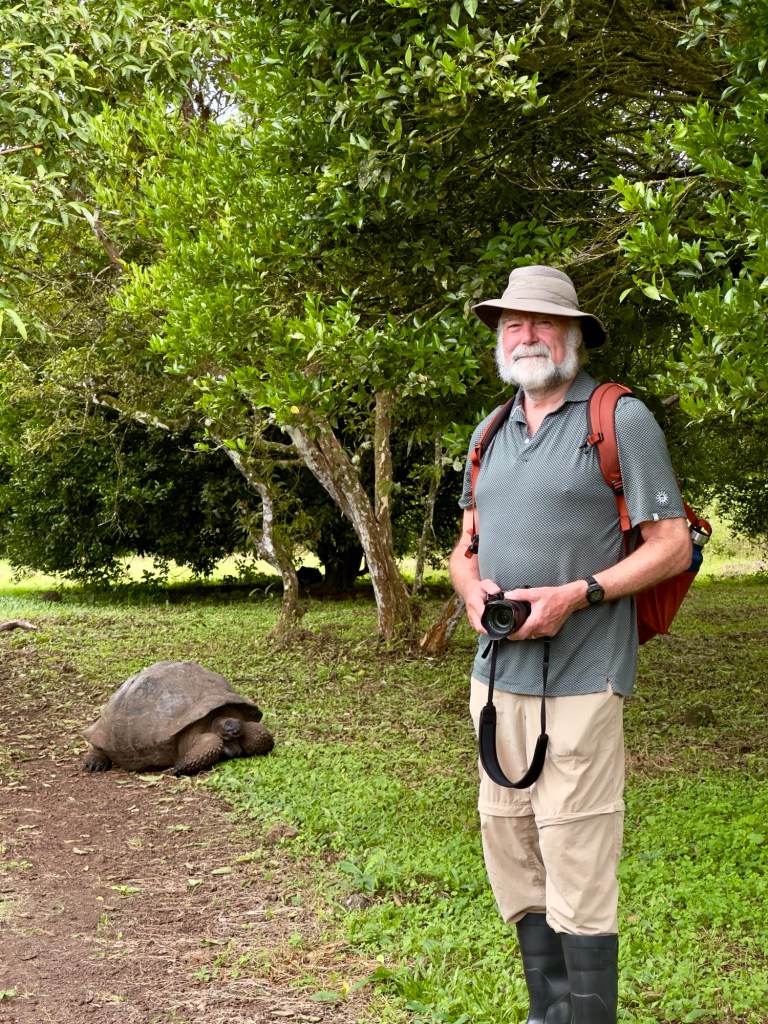
Most wildlife behavior can be boiled down to three activities: finding food, having sex, and avoiding death. In general, we seem to spend 80% of our time talking about sex, 5% talking about food, and about 5% talking about survival. Today was no different.
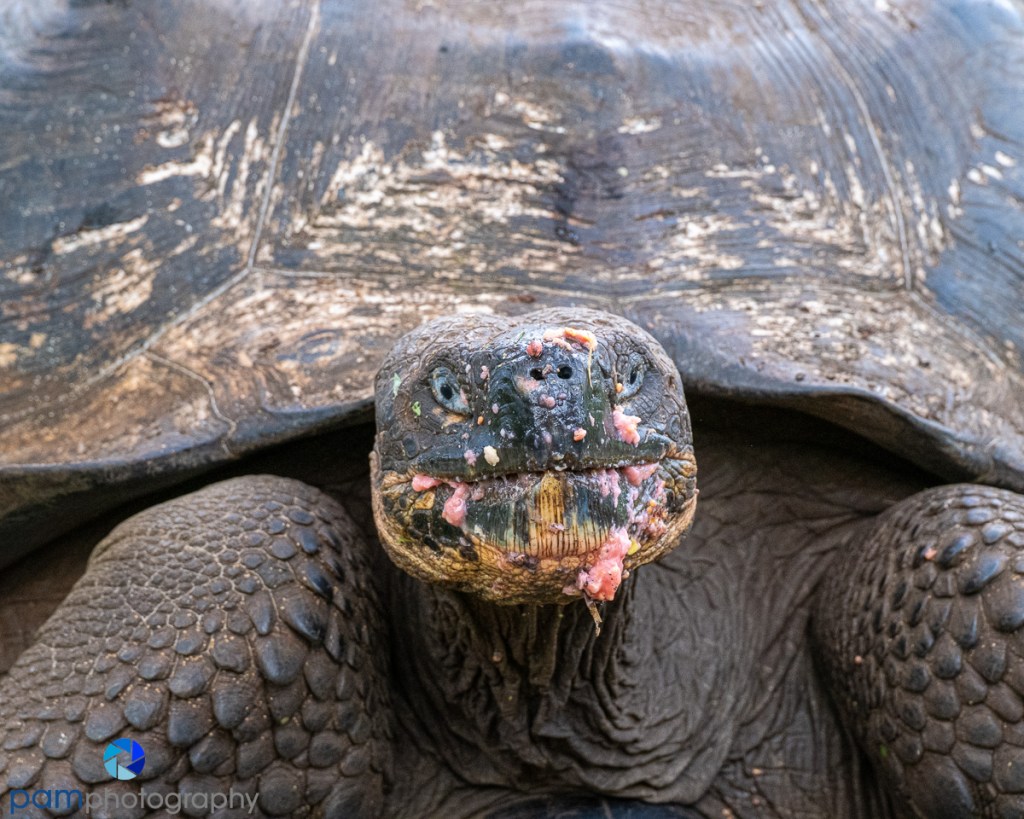
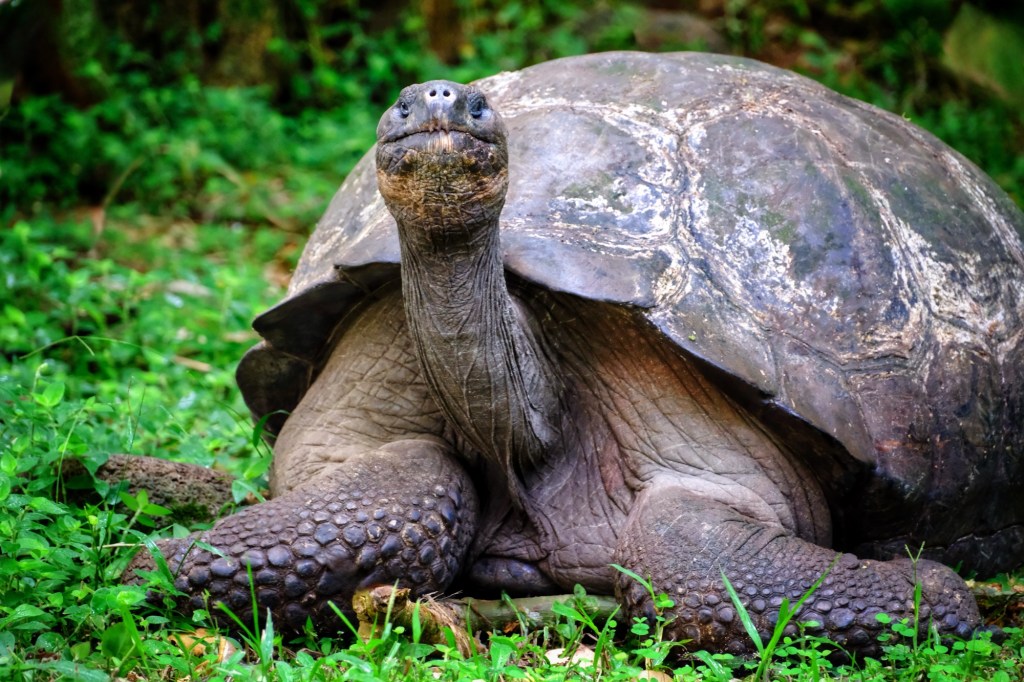
Our day focused on the Galapagos Tortoise. So let’s start with food, tortoises love guavas. They go after them with such gusto the lower part of their faces are covered with the pink fruit. As with almost everything in the Galapagos, there is a name for that, tortoise lipstick. They have eaten so much of this sugary fruit it is now suspected that some may suffer from diabetes. Even with all the evolution that has occurred in this small part of the world, the tortoises have not evolved to metabolize this invasive fruit. So there it is, your 5% synopsis on tortoise eating peculiarities.
Onto survival. Sailors between the 17th and 19th centuries decimated the tortoise population. They killed over 230,000 tortoises in just 200 years, leaving just 20,000. There are different tortoise species because they adapted to the conditions of different islands. Some of those are now extinct.
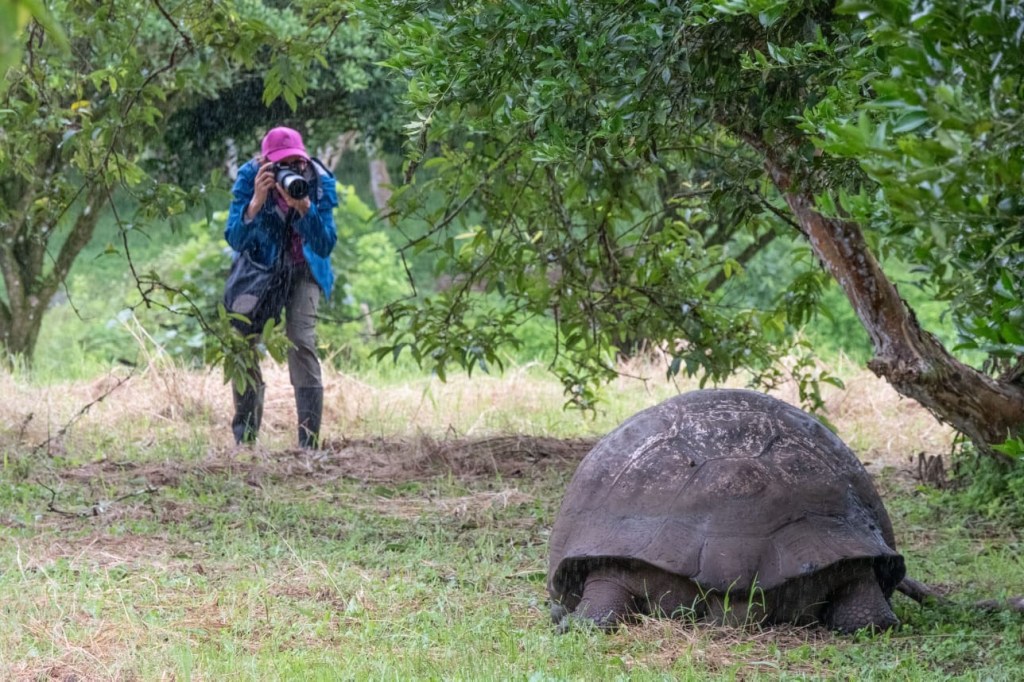
This brings me to your 80% tortoise sex education and the saga of Lonesome George. He was the last tortoise of the Pinta Island species with no mate to be found. They even tried breeding him again when they found a hybrid species of the tortoise that had some Pinta genes. But none of the eggs were viable. Apparently size does matter. It was determined after George died, he just wasn’t long enough to fertilize the eggs.
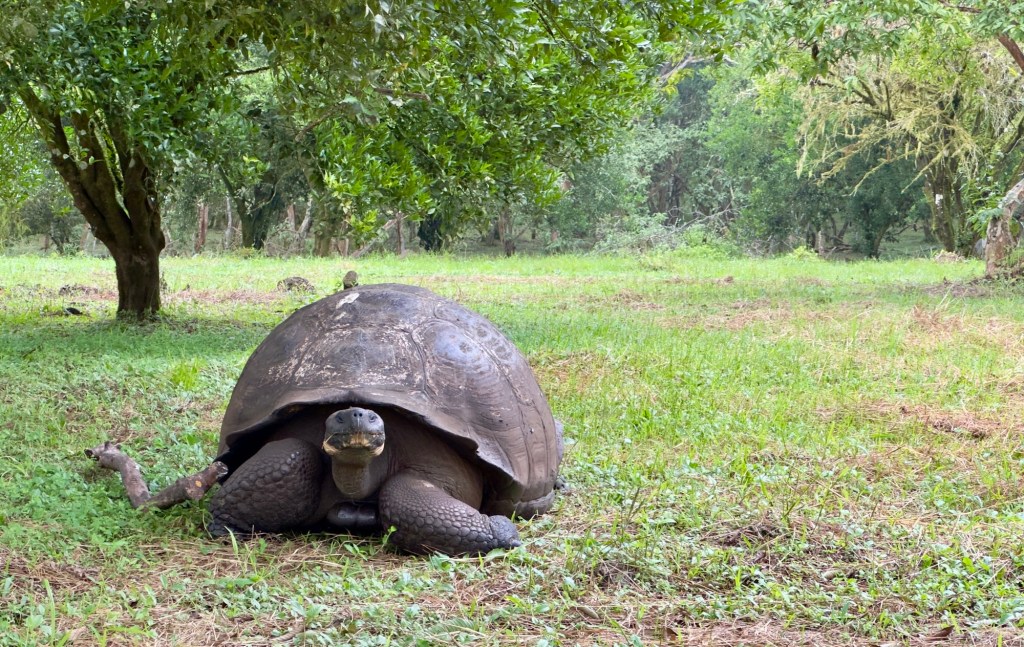
Let’s compare Lonesome George to Super Diego who was elevated to “super stud” status after he single-handedly revived the critically endangered Española sub-species. He was found in the San Diego zoo where he spent 30 years of his early life. After transferring him to the breeding center on Santa Cruz Island he fathered over 800 offspring in 40 years. I think you’ll agree with me, that guy did super hero work, deserved his nickname… and retirement, which occurred in 2020. He now lives in his natural habitat and has anywhere from 10-20 more years of life. He is currently pursuing travel, and gourmet meals of cactus pads. There is no update as to whether he still enjoys engaging in frisky behavior every now and then.
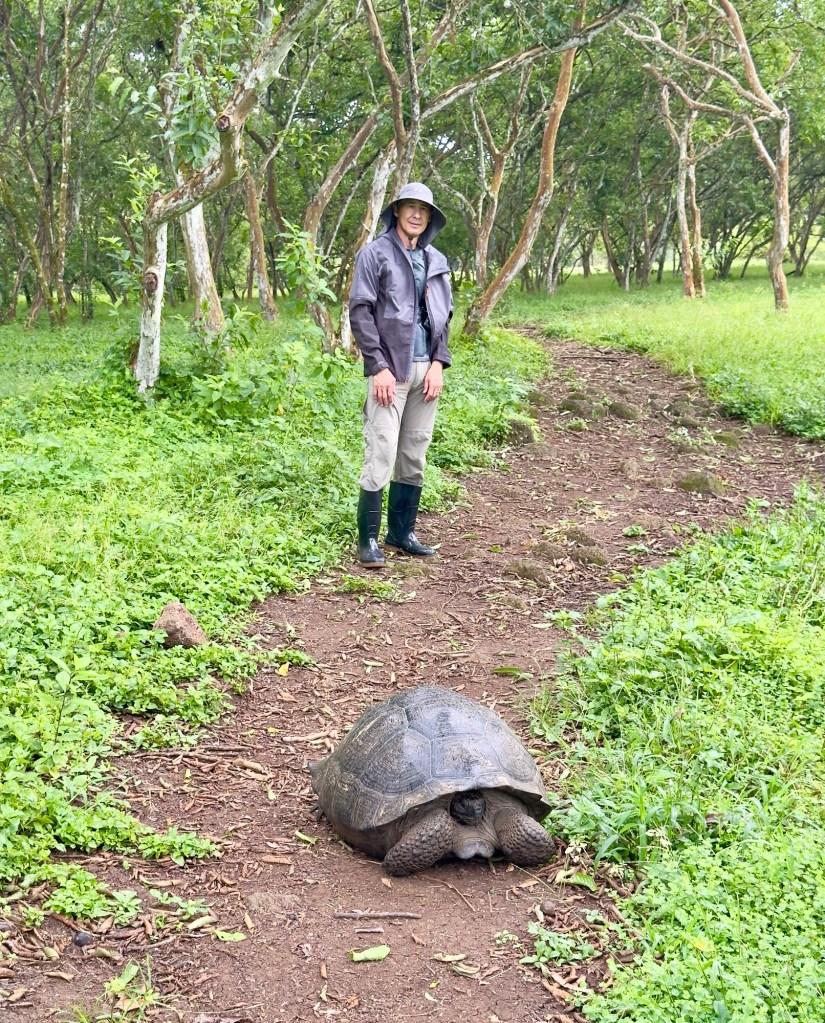
Last interesting bit of information for your next riveting game of Trivia Pursuit. The sex of a tortoise is determined by the temperature surrounding the egg, it’s officially called the “incubation chamber”. Boys like it cooler than girls by approximately 1.5 Celsius. Does this resemble your home? At the breeding center on Santa Cruz, they used to use a hair dryer to warm the eggs for about 4 hours every day to help create a desired male/female ratio of hatchlings. They did this for anywhere between 100 to 300 eggs at one time. Can you imagine holding a har dryer for that long? Current reports are that they’ve upgraded their equipment to incubators
In other Santa Cruz investment news, the only hospital on the island, which was one of two in the whole archipelago, is closed and boarded up. But there is a new soccer stadium at the cost of $4.8 million USD. It’s been used once. The president needed a place to land his helicopter.
One last reflection before we leave this island. As we drove from the dock to the highlands to visit the tortoise reserve, I noticed a principal standing in the entry to the elementary school shaking hands with each student as they entered. It was the first day of school here and this quiet gesture of etiquette struck me as another piece of evidence how the Galapagos can be both quickly evolving and yet also timeless.


Leave a Reply