
Queue up: The whole album Chant

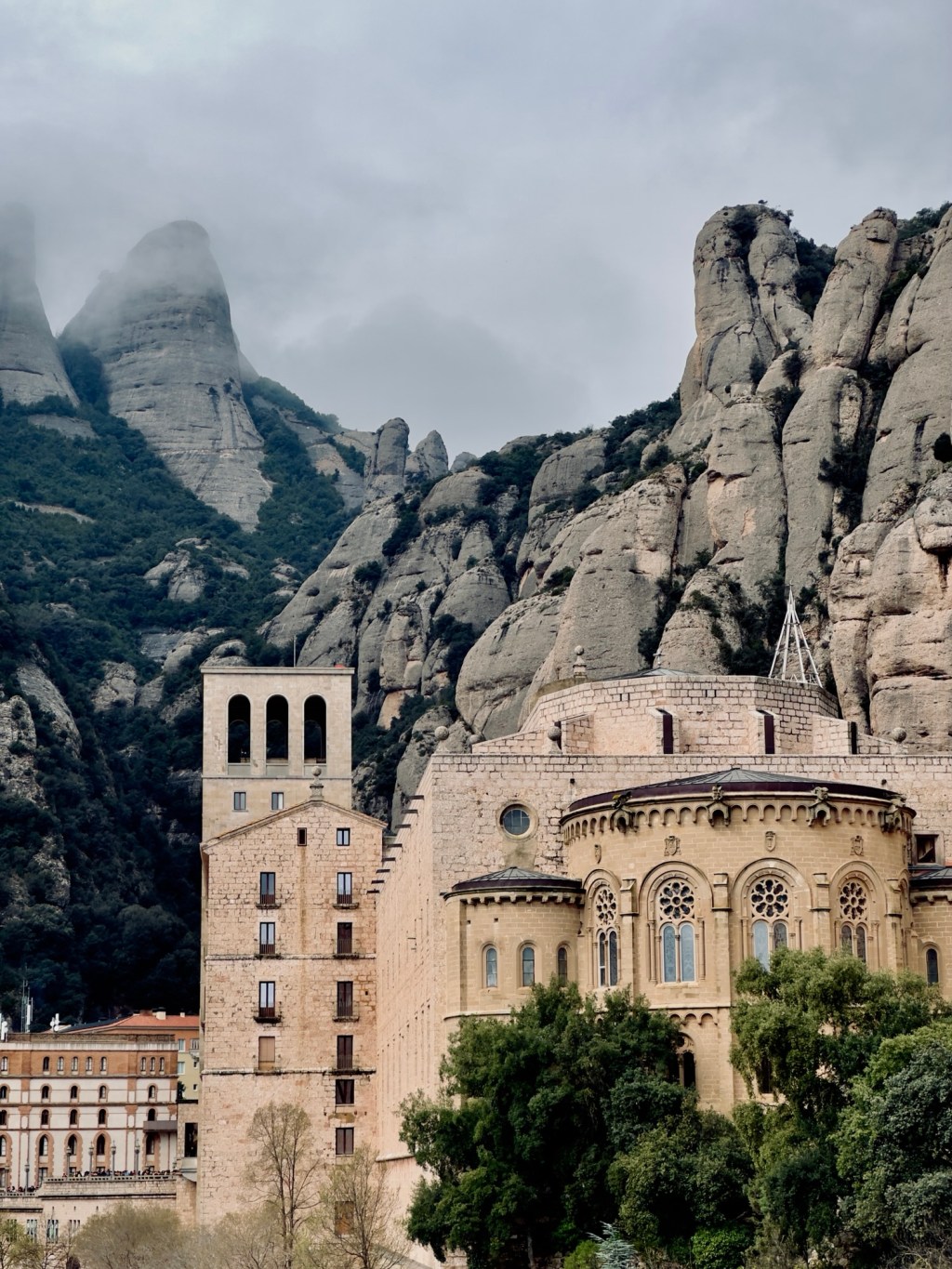
We loaded up, and headed out of Barcelona to see “a temple on a mountain surrounded by caves”. I knew we were going to see a monastery, and there was a famous statue of the Virgin Mary there, and maybe a few other people would be there too, but what I failed to appreciate is that it is a major pilgrimage site with the infrastructure to support thousands of visitors a day. To be fair, we had seen a lot of popular statues of the Virgin Mary on this trip, but I didn’t realize how important THIS particular one was.
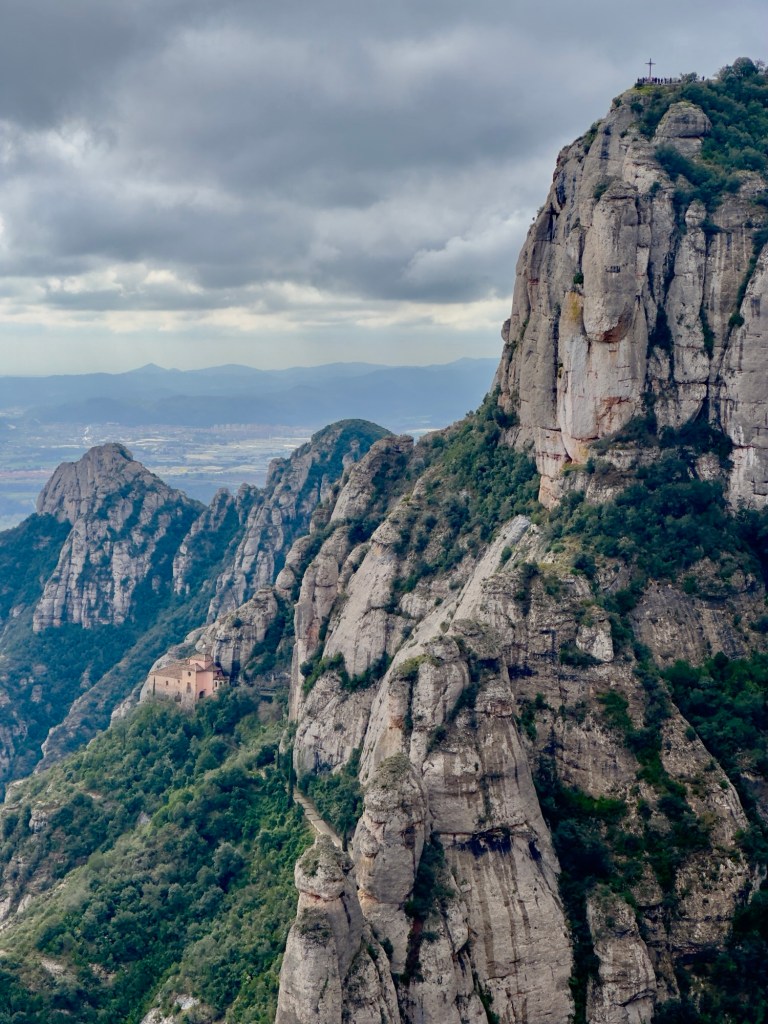
As we kept driving higher up the winding mountain road, leaving the sun behind and working our way into the clouds, we rounded a corner to see massive jagged, but rounded peaks, and a packed parking lot. Oddly, though, the place didn’t feel too crowded.

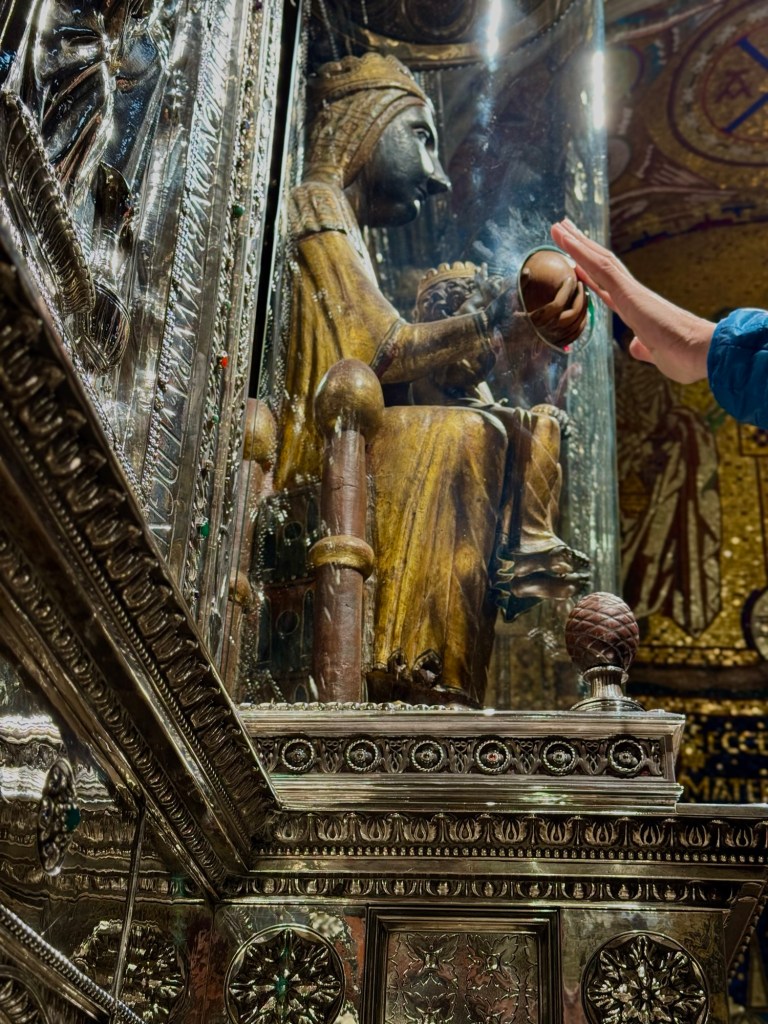
As we continued to climb on foot, our guide Matteo, provided historical context. Here is the gist: There is a statue of Mary that has turned black over the years. It is said, she was carved by St. Luke, and brought to Spain by St. Peter. She has been hidden from intruders twice, once by St. Peter after the Moorish invasion, and then again in 1811 to protect her from Napoleon’s French troops. In medieval times a couple of kids saw lights and heard songs coming from a cave in the mountains. There they found the statue, told the bishop, who declared it a miracle, and now it’s a pilgrim destination. People come here to touch the orb in Mary’s right hand and seek blessing.

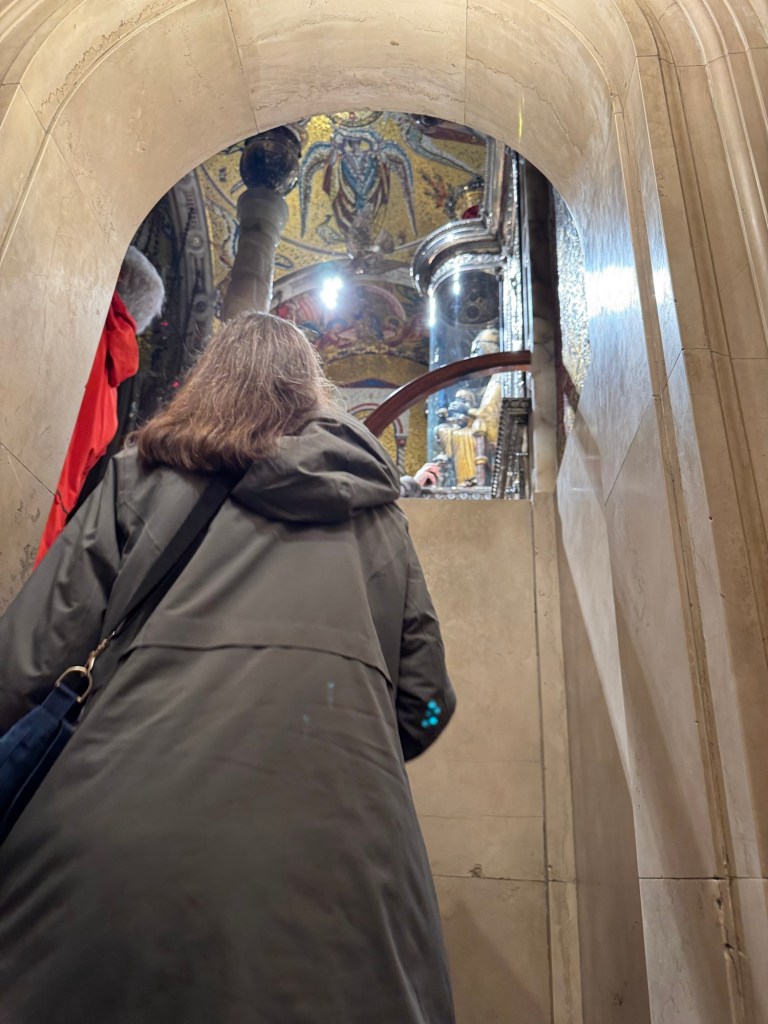
One thing that really struck me about the visit, was the one-on-one experience with the statue that lasts for seconds. I was expecting to walk into the basilica, muscle my way through a crowd of people to the front to see the statue. Instead, you queue up along the inside of the church (which was having a mass while we were there), climb up a couple of narrow staircases, and then one-by-one you pass in front of the statue which sits on a silver alter enclosed in glass, with a small cutout so you can touch the orb. All of this happens behind the alter of a mass that is being performed in front of hundreds of people. It is also live-streamed on TV to the courtyard outside of the basilica where people can watch while they wait to get inside. It is a highly intimate experience, that seems to be happening in front of hundreds, if not thousands of people.

The area on the mountain around the basilica is like a small town. There are three types of lodging, police, a post office, and a place to buy food. There is also an art museum. Most of the art and antiquities were donated by devout worshippers and included a couple of Picassos, a Monet, a Renoir, a Pisarro, and so much more. It was a nice, small and easy museum to spend some time in.
To leave, we took a little yellow cable car built in 1930 down the hill to meet the car. Matteo assured us that it was safe, it was built by Germans. I wonder how many people ask him that question.

We were off to lunch. The restaurant would have been impossible to find on our own. It has been run by the same family for over 300 years. Every generation plays a part in today’s operations. They also made wine so Peter and Mark were in heaven. It was similar to eating at someone’s house. You walk in, sit down, and food starts hitting the table. You don’t order, and everything is served family style. When the meat dish arrived – sausage, pork filet, and lamb chops, there were enough pieces for one per person. We had a bit of a dust-up over lamb chops, however, when Peter put two on his plate, and we had to coax him into reluctantly giving one up. More wine was poured and it seemed like everything settled down again. It’s amazing what good food and drink can cure.


©Copyright 2025. All rights reserved. No reproduction of text or images without permission.

 pamphotography
Leave a comment